Межпоколенческая коммуникация
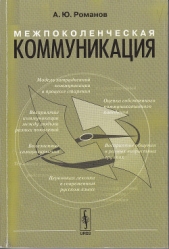
Межпоколенческая коммуникация читать книгу онлайн
Настоящая книга знакомит читателя с проблематикой межпоколенческих коммуникативных исследований, вводит в курс теоретических моделей, используемых при описании коммуникативного взаимодействия людей разного возраста. Впервые на русском языке приводится подробный анализ факторов, которые влияют на межпоколенческую коммуникацию внутри и вне семьи. Читатель познакомится с результатами проведенных автором социолингвистических опросов, проливающих свет на коммуникативное поведение россиян и их восприятие общения с людьми разного возраста. В работе приводятся многочисленные примеры общения между поколениями, как внутри семьи: между родителями и детьми, бабушками, дедушками и их внуками, тещами и зятьями, свекровями и невестка ми; так и вне семейного круга. Предлагаются практические рекомендации и советы, позволяющие решать задачи повышения уровня эффективности коммуникации между представителями разных поколений. Книга адресована специалистам, интересующимся проблемами социолингвистики и речевой коммуникации, студентам, аспирантам и преподавателям вузов, социальным работникам и всем, чья профессиональная или общественная деятельность связана с коммуникацией между людьми разного возраста.
Внимание! Книга может содержать контент только для совершеннолетних. Для несовершеннолетних чтение данного контента СТРОГО ЗАПРЕЩЕНО! Если в книге присутствует наличие пропаганды ЛГБТ и другого, запрещенного контента - просьба написать на почту [email protected] для удаления материала
Ryan, E., Giles, H., Bartolucci, G, Henwood, K. Psychological and social psychological components of communication by and with the elderly. Language and Communication, 1986, 6,1-24.
Ryan, E., Cole R. Evaluative perceptions of interpersonal communication with elders. In H. Giles, N. Coupland, & J. Wiemann (Eds.), Communication, Health and the Elderly, Manchester: Manchester University Press, 172-190.
Ryan, E., Hummert, M., Boich, L. Communication predicament of aging: patronizing behavior toward older adults. Journal of Language and Social Psychology, 1995, 14, 1-2, 144-166.
Schaie, К. Ageist language in psychological research. American Psychologist, 1993, 48, 49-51.
Segrin, C. Age moderates the relationship between social support and psychological problems. Human Communication Research, 2003, 29, 3, 317-342.
Serewicz, M. Getting along with the in-laws: relationships with parents-in-law, In K. Flaoyd, M. Morman (Eds.), Widening the Family Circle. New Research on Family Communication. Thousand Oaks, CA: Sage, 2006,101-117.
Shenitz, B., Holleran, A. The Man I Might Become: Gay Men Write about Their Fathers. New York: Marlowe, 2002.
Sher, A., Aging in Post-Mao China: The Politics of Veneration. Boulder, CO: Westview, 1984.
Singer, A., Weinstein, R. Differential paternal treatment predicts achievement and self-perception in two cultural contexts. Journal of Family Psychology, 2000, 14, 491-509.
Somary, K., Strieker, G Becoming a grandparent: A longitudinal study of expectations and early experiences as a function of sex and lineage. The Gerontologist. 1998, 38,53-61.
Song, D., Youn, G Characteristics of loneliness for the elderly Korean. Journal of Korea Gerontological Society, 1989, 9, 64-78.
Street, R., Giles, H. Speech accommodation theory: a social cognitive approach to language and speech behavior. In M. E. Roloff and C. R. Bereger (Eds.), Social Cognition and Communication, Newbury Park, CA: Sage, 1982: 193-226.
Stuart, S., Vanderhoof, D., Beukelman, D. Topic and vocabulary use patterns of elderly women. Augmentative and Alternative Communication, 1993, 9, 95-110.
Suganuma, M. Self-disclosure and self-esteem in old age. Japanese Journal of Psychology, 1997, 45, 12-21.
Tajfel, H. Human Groups and Social Categories. Cambridge: Cambridge University Press, 1981.
Takiff, M. Brave Men, Gentle Heroes: American Fathers and Sons in World War II and Vietnam. New York: William Morrow, 2003.
Tam, T., Hewstone, M., Harwood, J., Voci, A., Kenworthy, J. Inergroup contact and grandparent-grandchild communication: The effects of self-disclosure on implicit and explicit biases against older people. Group Processes and Intergroup Relations. 2006, 9, 413—429.
Thimm, C., Rademacher, U., Kruse, L. Age stereotypes and patronizing messages: features of age-adapted speech in technical instructions to the elderly. Journal of Applied Communication Research. 1998,26, 1,66-82.
Thome, A. Personal memory telling and personality development. Personality and Social Psychology Review. 2000, 4, 45-56.
Timmer, S., Veroff, J. Family ties and the discontinuity of divorce in black and white newlywed couples. Journal of Marriage and the Family, 2000, 62, 349-361.
Tmg-Toomey, S., Chung, L. Understanding Intercultural Communication. Los Angeles, CA: Roxbury Publishing Company, 2005.
Tobin, J. The American Idealization of old age in Japan. The Gerontologist, 1987, 27, 53-58.
Trees, A. Nonverbal communication and the support process: Interactional sensitivity in interactions between mothers and young adult children. Communication Monographs, 67, 239-262.
Triandis, H., Leung, K., Vallareal, M., Clark, F. Allocentric versus indiocentric tendencies. Journal of Research in Personality, 1985, 19, 395-415.
Turner, J. Towards a cognitive redefinition of the social group. In H. Tajfel (Ed.), Social Identity and Intergroup Relations. Cambridge: Cambridge University Press, 1982, 15-40.
Turner, J. Rediscovering the Social Group: A Self-Categorization Theory. Oxford, England: Blackwell, 1986.
Uhlenberg, P., Kirby, J. Grandparenthood over time: Historical and demographic trends. In M. Szinovasz (Ed.). Handbook on Grandparenthood. Westport, CT: Greenwood Press, 1998, 23-39.
Van Mens-Verhulst, J., Schreurs, J., Woertman, L. Daughtering and Mothering: Female Subjectivity Reanalyzed. New York, Routledge, 1993.
Waldron, V., Gitelson, R., Kelley, D. Gender differences in Social Adaptation to a retirement community: longitudinal changes and the role of mediated communication. The Journal of Applied Gerontology, 2005, 24, 4, 283-298.
Walters, S. Lives Together, Worlds Apart. Berkeley. University of California Press, 1992.
Ward, R., Spitze, G Consequences of parent-child co-residence: A review and research agenda. Journal of Family Issues. 1992, 13,553-572.
Webb, L. Common topics of conversation between young adults and their grandparents. Communication Research Reports, 1985,2,156-163.
Whalen, C., Henker, T., Hollingshead, J., Burgess, S. Parent-adolescent dialogues about AIDS. Journal of Family Psychology. 1996, 10,343-357.
Williams, A., Giles, H. Intergenerational conversations. Young adult’s retrospective accounts. Human Communication Research, 1996,23,220-250.
Williams, A., Nussbaum J. Intergenerational Communication across the Life Span. London. Lawrence Erlbaum, 2001.
Williams, A., Garrett, P. Communication evaluations across the life span: From Adolescent storm and stress to elder aches and pains. Journal of Language and Social Psychology, 2002,21,2, 101-126.
Wolff, F., Marsnik, N., Tacey, W., Nichols, R. Perceptive Listening. New York: Holt, Rinehart and Winston, 1983.
Wong, B. A Chinese American Community: Ethnicity and Survival Strategies. Singapore: Chopmen Enterprise, 1979.
Yeh, J., Williams, A., Maruyama, M. A comparison of young Taiwanese and American’s perceptions of intergenerational communication: Approving or disapproving grandmothers and strangers. Journal of Asian Pacific Communication, 1998, 8, 125-149.
Youn, G, Song, D. Aging Korean’s perceived conflicts in relationships with their offspring as a function of age, gender, cohabitation status and marital status. The Journal of Social Psychology. 1991, 132,299-305.
Yum, J. The impact of Confucianism on interpersonal relationships and communication patterns in East Asia. Communication Monographs, 55, 374-388.
Zhang, Y., Hummert, M. Harmonies and tensions in Chinese intergenerational communication. Younger and older adult’s accounts. Journal of Asian Pacific Communication, 2001, 11,203-230.
Summary
The book offers a comprehensive review of intergenerational communication. It is divided into a preface, an introduction, six chapters, and concluding comments: Chapter 1 examines theoretical frameworks in the study of intergenerational communication. In Chapter 2, factors of intergenerational communication are discussed. Chapter 3 contains a sociolinguistic study of intergenerational communication and its perception in Russia, and Chapter 4 is a sociolinguistic study of usage and understanding of religious words by people of different ages, Chapter 5 presents examples, problems, and solutions of intergenerational communication; Chapter 6 investigates ways to overcome the intergenerational barrier in communication.
The introduction states that intergenerational communication is a relatively new field in communication research, particularly in Russia, where no major studies based on communication among people of different ages have been published. The author argues that the age of participants is an important factor that influences the frequency and process of communication as well as the interlocutor’s level of satisfaction.