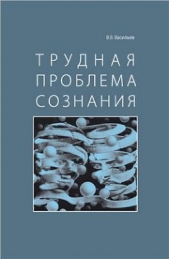
Сознание и вещи. Очерк феноменалистической онтологии.
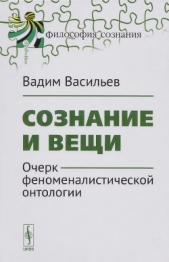
Сознание и вещи. Очерк феноменалистической онтологии. читать книгу онлайн
Сознание остается одной из главных загадок для философии и эксприментальной науки. Эта книга — попытка по-новому взглянуть па старый вопрос. Признавая успехи экспериментальных исследований сознания, автор тем не менее проводит свои изыскания и концептуальном ключе, пытаясь прояснить структуру и соотношение наших базовых убеждений о мире и о самих себе. Все мы верим в существование сознания у других людей, в то, что прошлый опыт можно использовать для прогнозов на будущее, в то, что в мире не бывает беспричинных событий и что физические объекты независимы от нашего сознания. Установив соотношение этих убеждений, мы, полагает автор, сможем уточнить онтологический статус сознания и понять отношение между ментальным и физическим. Автор критикует физикализм и эпифеноменализм и выдвигает натуралистическую версию интеракционизма, используемую им для оправдания интуиций здравого смысла. Автор благодарит Московский центр исследований сознания за помощь в подготовке книги к изданию.
Внимание! Книга может содержать контент только для совершеннолетних. Для несовершеннолетних чтение данного контента СТРОГО ЗАПРЕЩЕНО! Если в книге присутствует наличие пропаганды ЛГБТ и другого, запрещенного контента - просьба написать на почту [email protected] для удаления материала
Lowe E. J. Causal closure principles and emergentism // Philosophy. 2000. № 75: 4. P.571-585.
Lowe E.J. A Survey of Metaphysics. Oxford, 2002.
Macdonald C. Varieties of Things: Foundations of Contemporary Metaphysics. Malden MA, 2005.
Mackie J.L. The Cement of the Universe: A Study of Causation. Oxford, 1980.
Mackie J.L. Causes and conditions //Eds. Sosa E., Tooley M. Causation. Oxford, 1993.
Malcolm N. Knowledge of other minds // The Nature of Mind / Ed. by D. Rosenthal. N.Y., 1991. P.92-97.
Marcus E. Mental causation: Unnaturalized but not unnatural // Philosophy and Phenomenological Research. 2001. №61: 1. P. 57-83.
Mamas A. Methodological and ontological aspects of the mental causation problem // Physicalism and Mental Causation: The Metaphysics of Mind and Action / Ed. by S. Walter and H.-D. Heckmann. Exeter, 2003. P. 243-264.
McGinn C. The Problem of Consciousness: Essays Towards a Resolution. Oxford, 1993 (1991).
McGinn C. Problems in Philosophy: The Limits of Inquiry. Malden MA, 1993.
McGinn C. Can we solve the mind-body problem? // The Nature of Consciousness: Philosophical Debates / Ed. by N. Block, O. Flanagan, and G. Giizeldere. Cambridge MA, 1997. P. 529-542.
McGinn C. The Mysterious Flame: Conscious Minds in a Material World. N.Y., 1999.
McGinn C. Consciousness and Its Objects. N.Y., 2004.
McGinn C. Hard questions // Strawson G. et al. Consciousness and Its Place in Nature: Does Physicalism Entail Panpsychism? Charlottesville, 2006. P. 90-99.
McGinn C. Truth by Analysis: Games, Names, and Philosophy. N. Y., 2012.
McKinsey M. Refutation of qualia-physicalism // Situating Semantics: Essays on the Philosophy of John Perry / Ed. by M. O’Rourke and Corey Washington. Cambridge MA, 2007. P. 469-498.
McLaughlin В. P. Type epiphenomenalism, type dualism, and the causal priority of the physical // Philosophical Perspectives. 1989. № 3. P. 109-135.
Meillassoux Q. After Finitude: An Essay on the Necessity of Contingency. London, 2008.
Meixner U. New perspectives for a dualistic conception of mental causation // Journal of Consciousness Studies. 2008. № 15: 1. P. 17-38. Menzies P Counterfactual theories of causation: Entry in the Stanford Encyclopedia of Philosophy. 2001. http://plato.stanford.edu/entries/causation-counterfactual/
(дата обращения: 12.05.13)
Menzies P. The causal efficacy of mental states // Physicalism and Mental Causation: The Metaphysics of Mind and Action / Ed. by S. Walter and H.-D. Heckmann. Exeter, 2003. P. 195-223.
Menzies P. Platitudes and counterexamples // Beebee H., Hitchcock C., Menzies P. (eds.) The Oxford Handbook of Causation. N. Y., 2009. P.351-367.
Meyer M. The Present status of the problem of the relation between mind and body // The Journal of Philosophy, Psychology and Scientific Methods. 1912. №9: 14. P.365-371.
Mohrhojf U. Interactionism, energy conservation, and the violation of physical laws // Physics Essays. 1997. № 10: 4. P. 651-665.
Montero B. Varieties of causal closure // Physicalism and Mental Causation: The Metaphysics of Mind and Action / Ed. by S. Walter and H.-D. Heckmann. Exeter, 2003. P. 173-187.
Montero B. What does the conservation of energy have to do with physicalism? // Dialectica. 2006. № 60: 4. P. 383-396.
Moore G.E. Some Main Problems of Philosophy. N.Y., 1962 (1953).
Muijnck W. Dependencies, Connections, and Other Relations: A Theory of Mental Causation. Dordrecht, 2003.
Muijnck W. Two types of mental causation // Philosophical Explorations. 2004. №7: 1. P.21-35.
Nagel T. Brain bisection and the unity of consciousness // Synthese. 1971. №22. P.396-413.
Nagel T. What is it like to be a bat? // Philosophical Review. 1974. №83: 4. P.435-450.
Nagel T. The View From Nowhere. N.Y., 1986.
Nagel T. Mind and Cosmos: Why the Materialist Neo-Darwinian Conception of Nature Is Almost Certainly False. Oxford, 2012.
O’Regan J. K., Noe A. A sensorimotor account of vision and visual consciousness // Behavioral and Brain Sciences. 2001. № 24. P.939-1031.
Ohrstrmn E, Andersen J., Scharfe H.. What has happened to ontology // Dau F., Mugnier M.-L. & Stumme G. (Eds.): ICCS 2005, LNAJ 3596, p. 425-438. Berlin, 2005.
Papineau D. Thinking about Consciousness. N. Y., 2004 (2002).
Parfit D. Personal identity // Personal Identity / Ed. by J. Perry. Berkeley, 1975. P. 199-223.
Parfit D. Reasons and Persons. N.Y., 1986 (1984).
Passingham R. E., Lau H. C. Free choice and the human brain // Does Consciousness Cause Behavior? / Ed. by S. Pockett, W. P. Banks and S. Gallagher. Cambridge MA, 2006. P. 53-72.
Pauen M., Staudacher A., Walter S. Epiphenomenalism: Dead end or way out? // Journal of Consciousness Studies. 2006. № 13: 1-2. P. 7-19.
Pauen M. Was ist der Mensch? Die Entdeckung der Natur des Geistes. Miinchen, 2007.
Perry J. Knowledge, Possibility and Consciousness. Cambridge MA, 2001.
Pinker S. How the Mind Works. London, 1999 (1997).
Pinker S. The Blank Slate: The Modern Denial of Human Nature. N. Y., 2002.
Pinker S. The Stuff of Thought: Language as a Window into Human Nature. N.Y., 2007.
Place U. Т. Is consciousness a brain process? // British Journal of Psychology. 1956. №47. P.44-50.
Place U. T. Token-versus type-identity physicalism 11 Anthropology and Philosophy. 1999. №3: 2. P.21-31.
Place U. T. Identity theories. TS 1999.
Place U. T. Identifying the Mind: Selected Papers of U. T. Place. N. Y., 2004.
Polger T. Rethinking the evolution of consciousness 11 The Blackwell Companion to Consciousness / Ed. by M. Velmans and S. Schneider. Malden MA, 2007. P. 72-86.
Popper K., Eccles J. The Self and Its Brain: An Argument for Interactionism. B., 1977.
Pratt J. B. The present status of the mind-body problem // The Philosophical Review. 1936. №45: 2. P. 144-166.
Preston J., Bishop M. (eds.) Views into the Chinese Room: New Essays on Searle and Artificial Intelligence. N. Y., 2002.
Prinz J. J. The Conscious Brain: How Attention Engenders Experience. N.Y., 2012.
Putnam H. Minds and machines // Dimensions of Mind / Ed. by S. Hook. N.Y., 1960. P.148-180.
Putnam H. Psychological predicates // Art, Mind, and Religion / Ed. by W.Capitan and D.Merrill. Pittsburgh, 1967. P.37-48.
Putnam H. Meaning and reference // Journal of Philosophy. 1973. № 70. P.699-711.
Putnam H. Words & Life. Cambridge MA, 1994.
Quine W. V. States of mind // The Nature of Mind / Ed. by D. Rosenthal. N.Y., 1991. P.287-288.
Ramachandran V. S., Hirstein W. Three laws of qualia: What neurology tells us about the biological functions of consciousness, qualia and the self // Journal of Consciousness Studies. 1998. № 4: 4-5. P. 429-457. Ramachandran V. S. Mirror neurons and imitation learning as the driving force behind «the great leap forward» in human evolution // Edge. 2000. https://www.edge.org/3rd_culture/ramachandran/ramachandran_index.html (дата обращения: 16.05.13)
Ramachandran V. S. A Brief Tour of Human Consciousness: From Impostor Poodles to Purple Numbers. N.Y., 2004.
Ramachandran V. S. The Tell-Tale Brain: A Neuroscientist’s Quest for What Makes Us Human. N.Y., 2011.
Reid T. The Works of Thomas Reid. 1th ed. Edinburgh, 1872. Richardson R. C. The «scandal» of Cartesian interactionism // Mind. 1982. №91. P.20-37.